High Ledges and Beams
Dust is removed from structural ledges, beams, wall tops, and other horizontal surfaces outside normal reach.
Serving Sioux Falls, South Dakota & surrounding areas
Detailed overhead and kitchen cleaning for restaurants, cafés, and tea businesses, planned around your operating schedule and the conditions in your space.
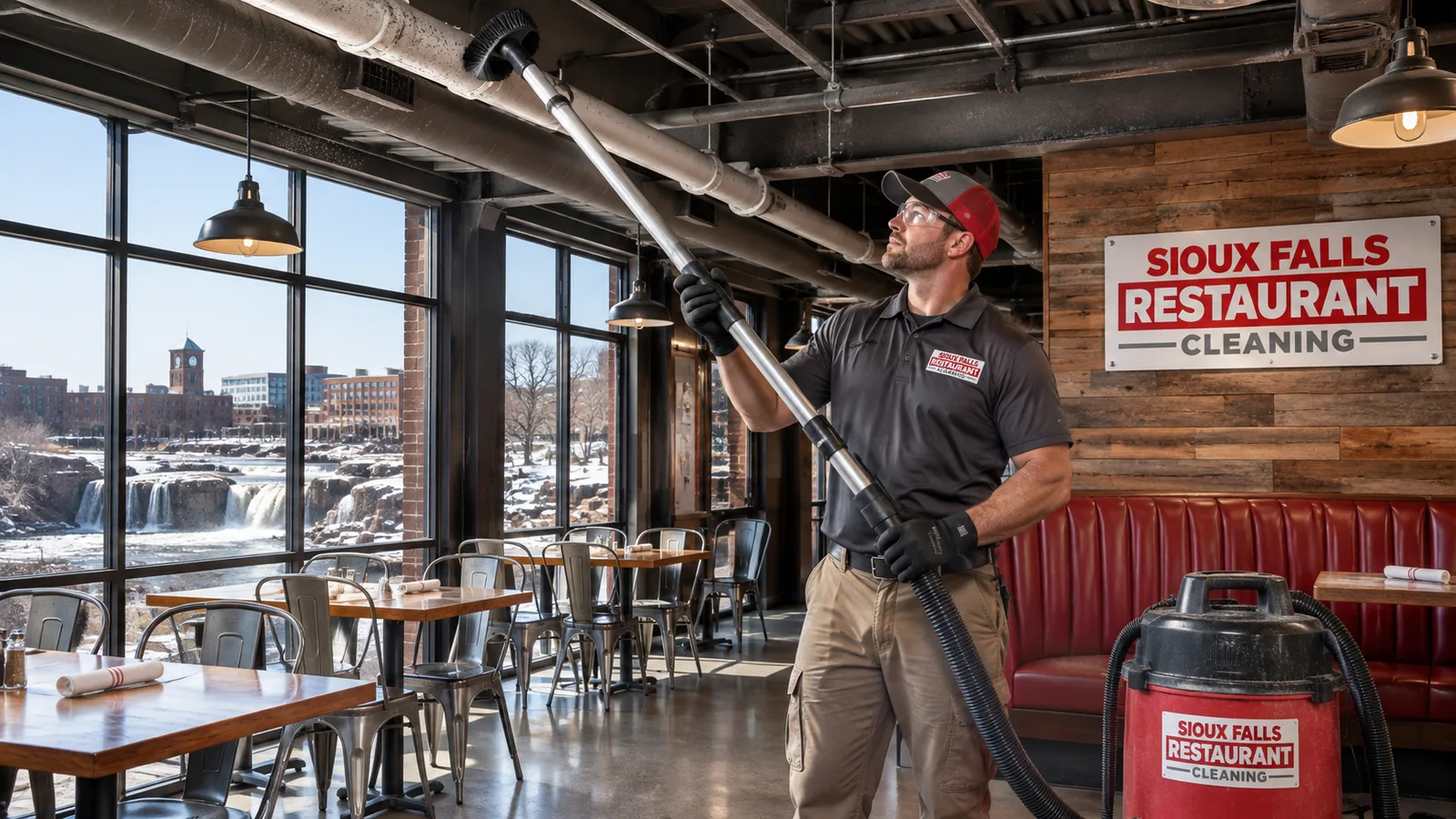
Beams · Pipes · Vents · Fixtures · Equipment Tops
Access, protection, and cleanup planned before overhead work begins.
Restaurant High Dusting Tea cleaning addresses dust and debris on surfaces that are difficult to reach during daily opening and closing routines. Common targets include exposed ductwork, pipes, conduit, ceiling vents, light housings, rafters, ledges, beams, and the tops of tall equipment or storage units. These surfaces can collect lint, dust, and airborne residue even when counters and floors are cleaned regularly.
Sioux Falls Restaurant Cleaning provides this detailed work for food and beverage businesses. Our restaurant specialists serving Sioux Falls, SD plan access, tools, containment, and cleanup around the room's layout and operating hours. Our location on South Reid Street also puts us close to restaurant areas around Downtown Sioux Falls and East Bank, where exposed ceilings and overhead mechanical components are common design elements.
The word “tea” in a search may refer to a tea shop, tea service, café, or restaurant search phrase. The practical need is the same: clean elevated surfaces without spreading settled debris onto food-contact areas, tables, shelving, or equipment.
The scope starts with an assessment of the dining room, service counter, kitchen, storage areas, and other included spaces. We identify overhead surfaces, note delicate fixtures, and determine whether each area calls for HEPA-filtered vacuuming, microfiber wiping, controlled brushing, or another suitable method.
Dining and customer areas may include exposed beams, decorative ledges, pendant-light housings, air diffusers, ceiling fans, wall tops, and high shelving. In tea and café settings, fine dust can be especially visible on dark fixtures, open shelves, and displays. Work is sequenced so cleaned debris is captured rather than pushed around the room.
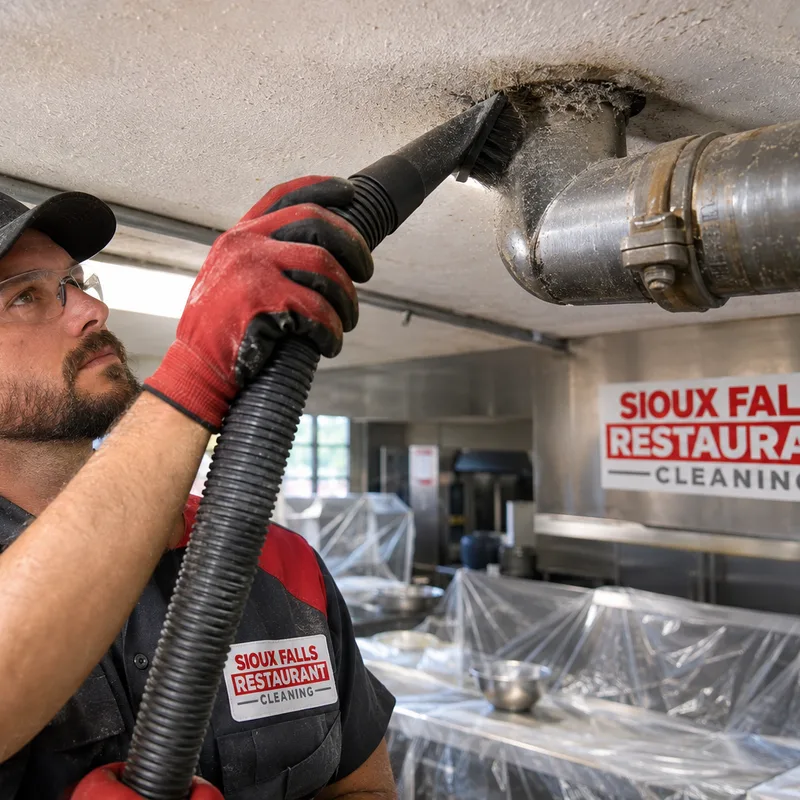
Kitchen scope can include accessible overhead pipes, conduit, vents, structural surfaces, wall-to-ceiling junctions, and the tops of tall non-food-contact equipment. High dusting is distinct from cleaning inside exhaust ducts or servicing fire-suppression systems. Those jobs require their own qualified providers and should not be treated as ordinary surface cleaning.
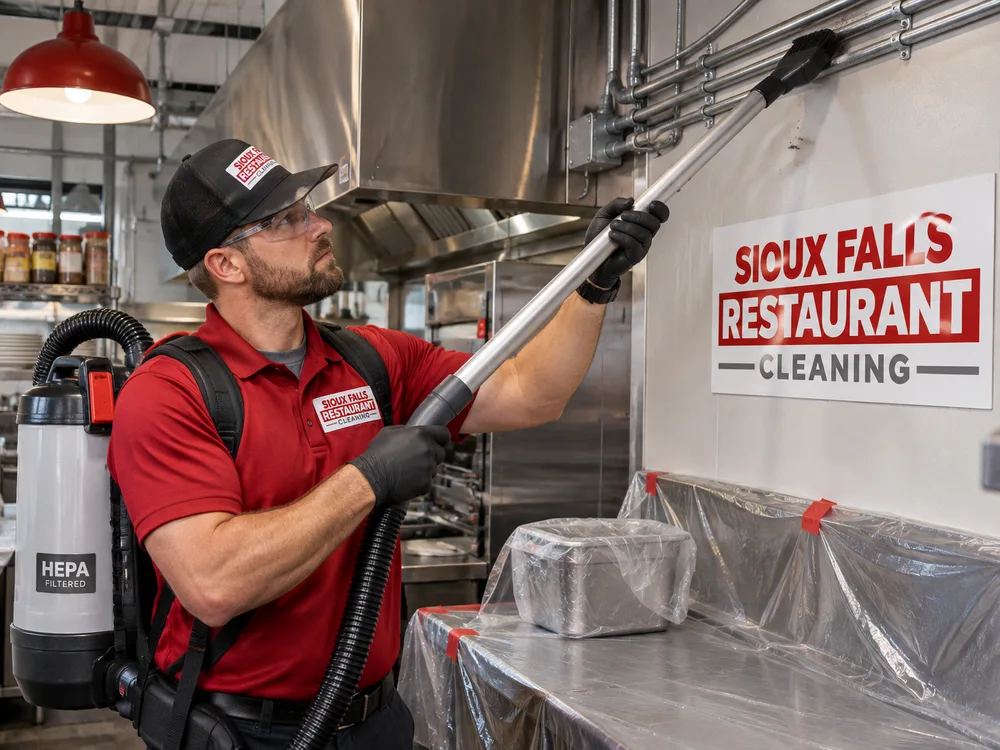
Dust is removed from structural ledges, beams, wall tops, and other horizontal surfaces outside normal reach.
Accessible pipes, conduit, and exterior duct surfaces are cleaned with methods suited to the material and level of buildup.
The exterior surfaces of light housings, ceiling fans, supply diffusers, and return grilles can be included when they are safe to access.
The tops of refrigeration units, cabinets, storage racks, and other tall fixtures are addressed when access and clearance allow.
High shelving and display areas can be handled carefully around packaged goods, décor, and delicate equipment.
Settled material is collected, protective coverings are removed, and affected lower surfaces receive a final cleanup before the area is returned to use.
We discuss the rooms to be cleaned, ceiling height, operating schedule, access restrictions, and any surfaces that need special care. Photos or an on-site review may be needed for an accurate scope.
Tables, preparation surfaces, displays, and sensitive equipment are moved or covered as appropriate. Ladders, extension poles, and vacuum equipment are selected for the working height and floor conditions.
Technicians work in a controlled sequence so debris from beams, pipes, fixtures, and ledges is captured before lower surfaces receive final attention.
The crew checks the included surfaces, removes coverings and collected debris, and returns movable items as agreed. Any inaccessible or damaged area is documented rather than handled unsafely.
A restaurant kitchen has different cleaning demands than a dining room. Heat and airborne cooking residue can make dry dust cling to overhead surfaces. The right method depends on whether the deposit is loose dust, a bonded film, or grease accumulation. Dry high dusting tools are useful for loose material, while a compatible degreasing process may be needed for washable surfaces with oily residue.
Electrical components, hot equipment, food, utensils, and open ingredients require careful control. Production may need to stop in the immediate work zone, and food-contact surfaces should be cleared or protected before overhead work begins. Clean tools must also be matched to the area to limit cross-contamination between kitchen, restroom, and dining spaces.
High dusting does not replace daily sanitation, hood cleaning, pest management, or HVAC maintenance. It fills the gap between routine reachable cleaning and specialized system service. A written scope should state which rooms and surfaces are included, the access method, the cleaning method, and the conditions that would require separate work.
Restaurant cleaning is easier to control when customer traffic, active cooking, and food handling have stopped in the work zone. Many projects are therefore planned before opening, after closing, or during a scheduled shutdown. The best timing depends on ceiling height, furniture movement, kitchen production, and how much residue is present.
Downtown Sioux Falls and the East Bank area include restaurant spaces in buildings with varied ceiling layouts, so access may involve exposed structures, narrow service areas, or fixtures over seating. Near The Empire Mall, larger dining rooms may require the work to be divided into zones so furniture and equipment can be moved methodically. In Falls Park and Phillips Avenue visitor areas, scheduling may also need to account for busy meal periods and event-driven traffic.
South Dakota winters can bring tracked-in grit and long periods with doors and windows closed, while seasonal heating and cooling move airborne particles through occupied rooms. A recurring high-dusting plan can be adjusted to the restaurant's actual buildup rather than assigned an arbitrary interval. Open ceilings, nearby construction, operating hours, and cooking volume all affect how quickly overhead surfaces need attention.
Get a written scope for the overhead surfaces, access needs, protection measures, and scheduling window before cleaning begins.
Call for a Free QuotePricing depends mainly on square footage, ceiling height, buildup, access, and the number of rooms included. An open dining room with reachable beams differs from a kitchen with tight equipment clearances and bonded residue. Photos may support an initial estimate, but a walkthrough is often the best way to confirm the exact scope and price.
Work is usually safer and easier to contain when guests are absent and food preparation has stopped in the immediate area. Sioux Falls restaurants often schedule it before opening, after closing, or on a closed day. Limited work during operating hours may be possible in a fully separated zone, depending on access and the risk of falling debris.
A small, accessible area may be completed in one scheduled visit, while a large dining room and kitchen may need multiple work periods. Ceiling height, furniture movement, residue type, and protection requirements determine the duration. The schedule should be set after the included surfaces and access conditions have been reviewed.
Open food, utensils, and exposed food-contact items should be removed or securely protected before overhead cleaning begins. The agreed preparation plan may also call for moving tables, displays, or portable equipment. Heavy or connected equipment should remain in place unless safe movement has been arranged in advance.
No, surface high dusting should not be treated as internal hood or exhaust-duct cleaning. Accessible exterior surfaces may be included in the written scope, but grease exhaust systems and fire-suppression components require specialized procedures and qualified providers. We identify those boundaries before work starts.
The interval should be based on observed buildup, not a fixed rule. Open ceilings, high cooking volume, air movement, nearby construction, and long operating hours can shorten the interval. After the first Sioux Falls service, the condition of beams, vents, lights, and equipment tops provides a practical basis for recurring scheduling.
Yes, when the displays can be cleared, covered, or worked around safely. Packaged tea, cups, brewing tools, and open ingredients should be removed from the immediate zone. Delicate décor and high shelving are documented during the assessment so the crew can choose controlled vacuuming or hand wiping instead of aggressive brushing.
Tell Sioux Falls Restaurant Cleaning about the rooms, ceiling layout, access limits, and preferred work window. We will help define a practical scope for the overhead and kitchen surfaces that need attention.