Restaurant Cleaning · Sioux Falls

Restaurant Cleaning Services In Sioux Falls

Keep guest areas ready for opening with a cleaning plan built around your hours, floor materials, traffic patterns, and food-service environment.

✓ Written room-by-room scope ✓ Scheduled around operations ✓ Surface-specific floor care
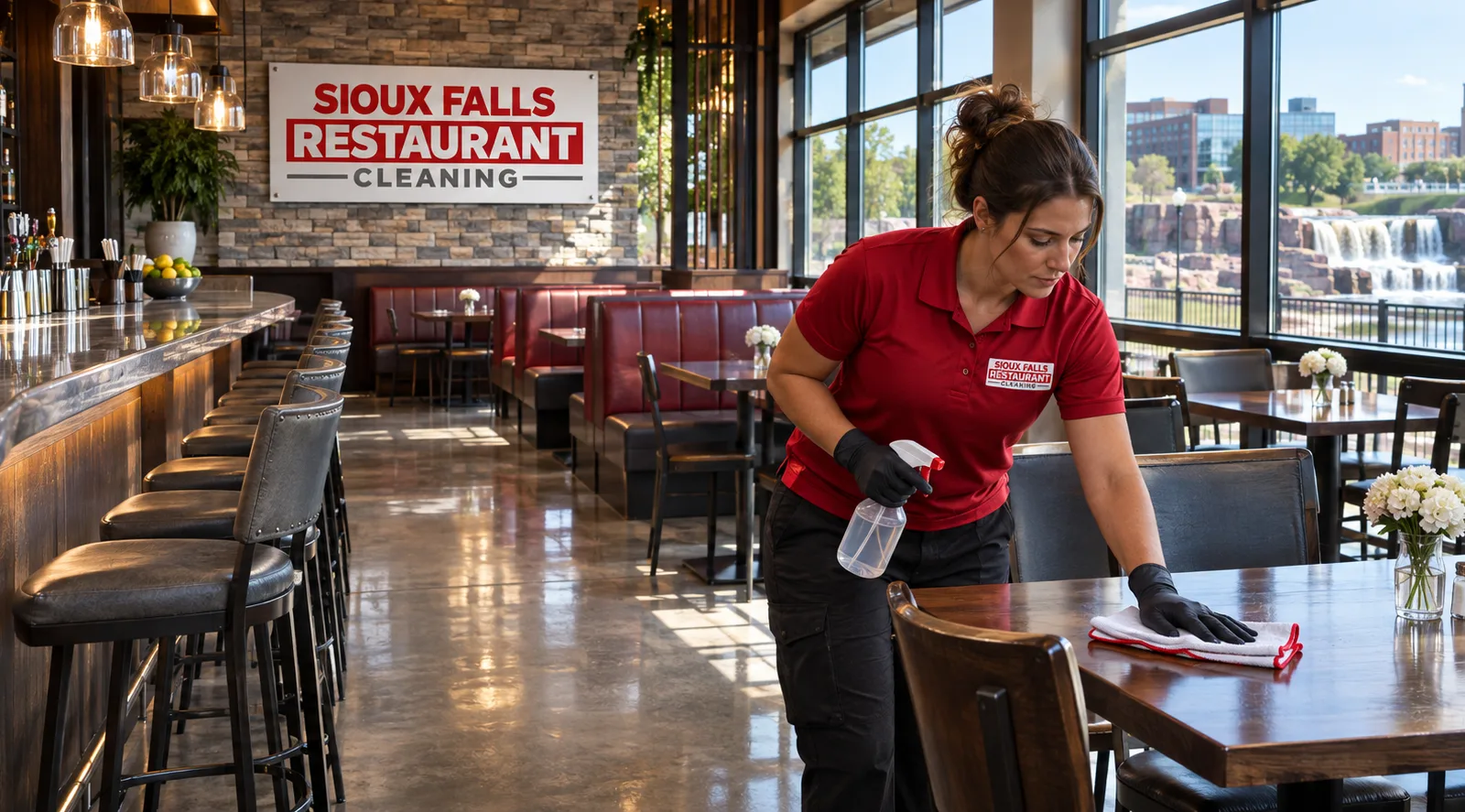
A cleaning professional preparing a polished Sioux Falls restaurant dining room with clean tables, floors, booths, and bar surfaces

Dining rooms · Bars · Restrooms · Floors · Back areas

Planned around opening, closing, deliveries, and staff access.

Operational Cleaning

Reliable Cleaning Built Around Restaurant Operations

Restaurant Cleaning Services should support the way your establishment operates. Sioux Falls Restaurant Cleaning develops written scopes for dining rooms, bars, restrooms, entryways, service stations, floors, and selected back-of-house areas. The work can be planned around opening, closing, deliveries, and staff access so cleaners are not competing with guests or food preparation.

We are a professional restaurant company in Sioux Falls focused on repeatable work rather than vague promises. Each plan identifies the rooms, surfaces, frequencies, access instructions, and priority details involved. That gives managers a practical basis for checking completed work and updating the scope when hours, menus, seating layouts, or traffic patterns change.

Sioux Falls weather puts extra pressure on restaurant entrances and floors. Winter snow, deicing residue, and tracked moisture can leave white film and slippery soil near doors. Wet spring conditions bring mud, while summer dust and pollen collect along glass, ledges, vents, and patio transitions. A useful plan accounts for those changing soil loads instead of treating every month the same.
Cleaning Areas

Restaurant Cleaning Services for Guest and Work Areas

Front of House Cleaning

Restaurant front of house cleaning in Sioux Falls can cover entrances, host stands, waiting areas, booths, chairs, table bases, service stations, partitions, ledges, and other guest-facing touchpoints. The scope distinguishes between cleaning surfaces and resetting items that restaurant staff need arranged a certain way.

Dining Area Cleaning

Dining area cleaning removes crumbs, food residue, fingerprints, dust, and floor soil around seating. Restaurant dining room cleaning can include accessible fixtures, booth edges, chair legs, windowsills, baseboards, and the difficult areas beneath movable furniture.

Restaurant Bar Cleaning

Bar cleaning addresses guest-facing counters, stools, foot rails, table bases, ledges, exterior cabinet faces, and surrounding floors. Sensitive equipment, bottle displays, drains, and food-contact surfaces are handled only when they are clearly included in the agreed scope.

Restroom Cleaning

Restaurant restroom cleaning in Sioux Falls can include toilets, urinals, sinks, mirrors, partitions, dispensers, floors, and touchpoints. Restocking and supply checks can be assigned clearly so managers know which products are included and which are supplied by the restaurant.

Restaurant Floor Cleaning

Floor care is matched to the material and soil. Vacuuming, dust mopping, damp mopping, autoscrubbing, and periodic detail work may be used for carpet, resilient flooring, sealed concrete, or tile and grout. Manufacturer guidance and chemical compatibility matter more than a one-product approach.

Back of House Cleaning

Restaurant back of house cleaning in Sioux Falls may cover approved corridors, dry-storage access areas, employee spaces, washable wall surfaces, and floors outside active food-production tasks. Grease-heavy equipment, exhaust systems, and regulated specialty work require separate definitions and appropriate providers.

Overhead Detail Work

High Dusting for Overlooked Surfaces

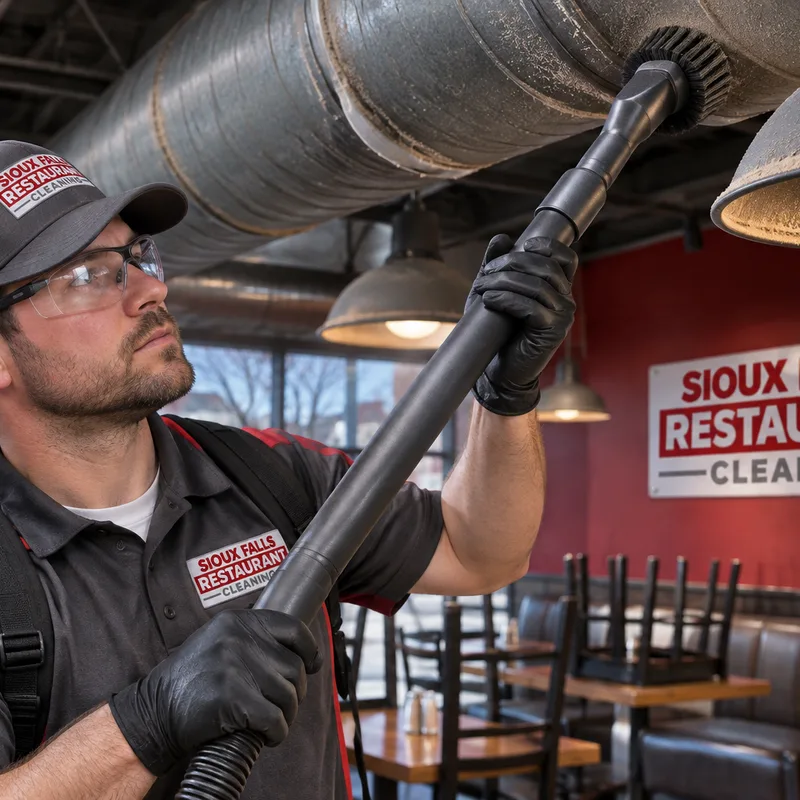
High dusting targets reachable overhead surfaces that routine nightly cleaning often misses. Typical locations include exposed pipes, duct exteriors, ceiling fans, light housings, beams, tops of partitions, high ledges, vent exteriors, and decorative elements. Dust is removed with suitable extension tools or controlled vacuum equipment rather than brushed into the dining area.

The method depends on the surface, height, accessibility, and what sits beneath it. Work areas may need to be isolated, furniture protected, and loose décor moved before cleaning begins. Ladders and access equipment must be used on stable flooring without blocking emergency routes. Overhead cleaning is usually scheduled while food is covered or absent and before lower surfaces and floors receive their final cleaning.

High dusting frequency should be based on visible accumulation, air movement, cooking residue, ceiling configuration, and access. A documented rotation keeps beams and fixtures from disappearing from the routine simply because they are outside normal eye level.

A trained restaurant cleaner using a controlled vacuum extension tool on exposed ductwork and light housings above an empty dining area
Controlled high dusting removes overhead buildup before lower surfaces and floors are finished.
Planned Process

How We Build and Maintain the Cleaning Plan

  1. Step 01

    Walk Through the Restaurant

    We review guest traffic, floor materials, seating, restrooms, bar areas, access restrictions, and selected back areas. The walkthrough also identifies high surfaces, fragile finishes, security procedures, and tasks that remain with restaurant employees.

  2. Step 02

    Define the Scope and Frequencies

    The written scope separates work needed every service from rotating detail tasks. It records approved chemicals or restrictions, supply responsibilities, alarm and key procedures, and the condition standard expected for each area.

  3. Step 03

    Schedule Around Operations

    Service timing is coordinated with closing duties, food preparation, deliveries, and opening checks. Downtown locations near Phillips Avenue may require careful entry and loading coordination, while restaurants near major retail corridors may need schedules that account for late guest traffic and large parking-lot soil loads.

  4. Step 04

    Clean in a Controlled Order

    Crews generally work from cleaner areas toward heavier soil, and from high surfaces to low surfaces. Restrooms use dedicated tools to reduce cross-contamination. Floors are finished after dust and debris have been removed from furniture, ledges, and fixtures.

  5. Step 05

    Inspect and Adjust

    Completed work is checked against the scope, and recurring concerns are recorded. Seasonal entrance soil, rearranged seating, special events, or changed operating hours can then be addressed through a clear revision rather than an informal request.

Material-Specific Care

Restaurant Floor Cleaning That Fits the Material

Restaurant floors collect abrasive grit, beverage spills, food particles, grease, and moisture. Cleaning starts with soil removal. Dry debris should be vacuumed or swept before wet work so it is not turned into slurry. The correct method then depends on the floor finish, grout condition, slip resistance, and chemical tolerance.

Tile and grout may need neutral daily cleaning plus periodic agitation where soil settles into grout lines. Resilient flooring requires products compatible with its finish. Sealed concrete and other specialty surfaces should follow the coating or manufacturer requirements. Carpeted dining areas benefit from thorough vacuuming and prompt spot treatment, with periodic extraction scheduled around drying time.

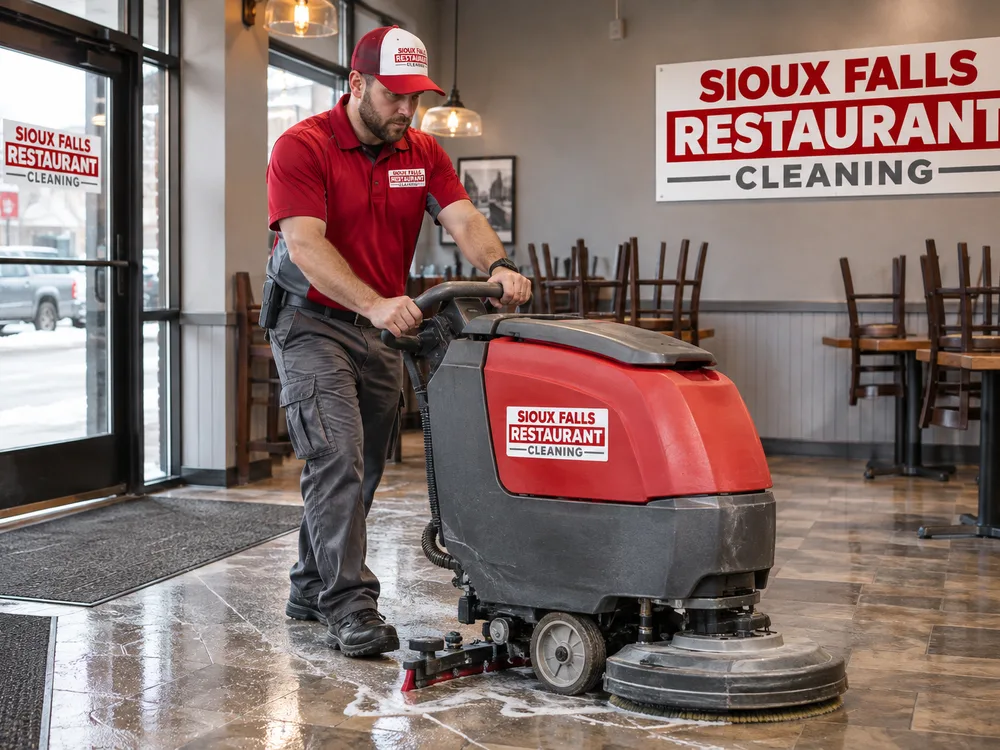
Entrances deserve separate attention during South Dakota winters. Deicing compounds and tracked moisture can spread beyond walk-off mats, leaving residue that repeated passes with dirty solution will not remove. Fresh solution, clean mop heads or autoscrubber pads, edge work, and appropriate wet-floor controls help produce a cleaner result. Cleaning improves the surface, but it cannot repair worn finishes, loose tile, damaged grout, or drainage problems.

A restaurant cleaner using an autoscrubber on a hard dining-room floor with entrance mats and edge detailing visible
Floor methods are selected for the material, finish, soil level, and available drying time.
Defined Scope

Clear Boundaries for Back-of-House Work

Back-of-house cleaning needs a precise scope because a restaurant contains food-contact surfaces, hot equipment, chemicals, sharp tools, and active production zones. General janitorial work can address designated floors, corridors, employee areas, washable surfaces, and accessible exterior faces when those tasks are approved. Restaurant staff should secure food, utensils, and sensitive equipment before service when required by the plan.

Cleaning and sanitizing are different steps. Cleaning removes soil; sanitizing is performed after cleaning with an appropriate product, concentration, contact time, and surface procedure. Food-contact sanitation should follow the restaurant's approved procedures and product labels. Chemical labels and Safety Data Sheets should remain available, and products should never be mixed unless the manufacturer explicitly permits it.

Kitchen exhaust hood and duct cleaning, pest control, grease-trap service, mold remediation, and repair work are specialty activities rather than assumed parts of routine restaurant cleaning. Defining those exclusions protects the restaurant and the cleaning crew. It also prevents a manager from learning after service that a high-risk task was never included.

A walkthrough can turn broad cleaning expectations into a written room-by-room scope, practical schedule, and clear list of rotating detail work.

Call for a Free Quote
Common Questions

Questions About Restaurant Cleaning in Sioux Falls

How much do Restaurant Cleaning Services cost in Sioux Falls?

Restaurant cleaning is usually quoted after a walkthrough because square footage alone does not show the labor involved. Price depends on service frequency, dining-room layout, restroom count, floor materials, bar detailing, soil level, high-dusting access, supply responsibilities, and the amount of back-of-house work. A written proposal should identify recurring tasks and periodic work separately so managers can compare scopes accurately.

Can cleaning take place after we close?

Yes, service can often be scheduled after closing or before opening when authorized access and enough work time are available. The plan should account for final guests, employee closing duties, food security, alarms, locked doors, deliveries, and floor drying. Restaurants with late hours need a realistic service window rather than a schedule that overlaps active operations.

How often should restaurant high dusting be scheduled?

High dusting should be scheduled according to accumulation, air movement, cooking residue, ceiling design, and access rather than an arbitrary interval. Exposed ducts, beams, fans, and high ledges may need a rotating inspection and cleaning schedule. The work should occur when food is protected and before lower surfaces receive final cleaning.

Do you clean restaurant kitchens and back-of-house areas?

Approved back-of-house areas can be included when each task and boundary is documented during the walkthrough. General work may cover designated floors, corridors, employee areas, storage access areas, and washable exterior surfaces. Exhaust systems, grease traps, pest treatment, equipment disassembly, and other specialty services should be assigned separately.

Can you clean bars without disturbing bottles or equipment?

Yes, bar cleaning can be limited to agreed guest-facing and accessible surfaces while bottles, taps, tools, and equipment remain under staff control. The scope should identify which items may be moved, which chemicals are approved, and who handles food-contact sanitation. This is especially important where floor cleaning must occur around fixed stools, rails, coolers, or drains.

What should our restaurant do before the cleaning crew arrives?

Staff should finish assigned closing duties, secure food and utensils, remove cash, identify spills or damage, and provide safe access to scheduled areas. Chairs or movable furnishings should be handled according to the written plan. Any change involving alarms, keys, deliveries, construction, special events, or operating hours should be communicated before the service window.

How do you handle winter salt and moisture at Sioux Falls entrances?

Winter entrance care uses repeated dry-soil removal, appropriate mat maintenance, fresh cleaning solution, and methods suited to the floor finish. Deicing residue can travel past the doorway on footwear, so the cleaning zone may extend into waiting and host areas. Managers should also replace saturated mats and address active moisture during business hours rather than waiting for the scheduled cleaning.

Build a Cleaning Scope That Fits Your Restaurant

Tell Sioux Falls Restaurant Cleaning about your hours, dining areas, floor materials, restrooms, bar, high surfaces, and back-of-house needs. We will use those details to discuss a practical service plan for your location.