Kitchen Cleaning · Brandon

Commercial Kitchen Cleaning in Brandon

Detailed care for restaurant kitchens that need to stay sanitary, orderly, and ready for the next service.

✓ Site-specific scope ✓ Around-service scheduling ✓ Surface-specific methods
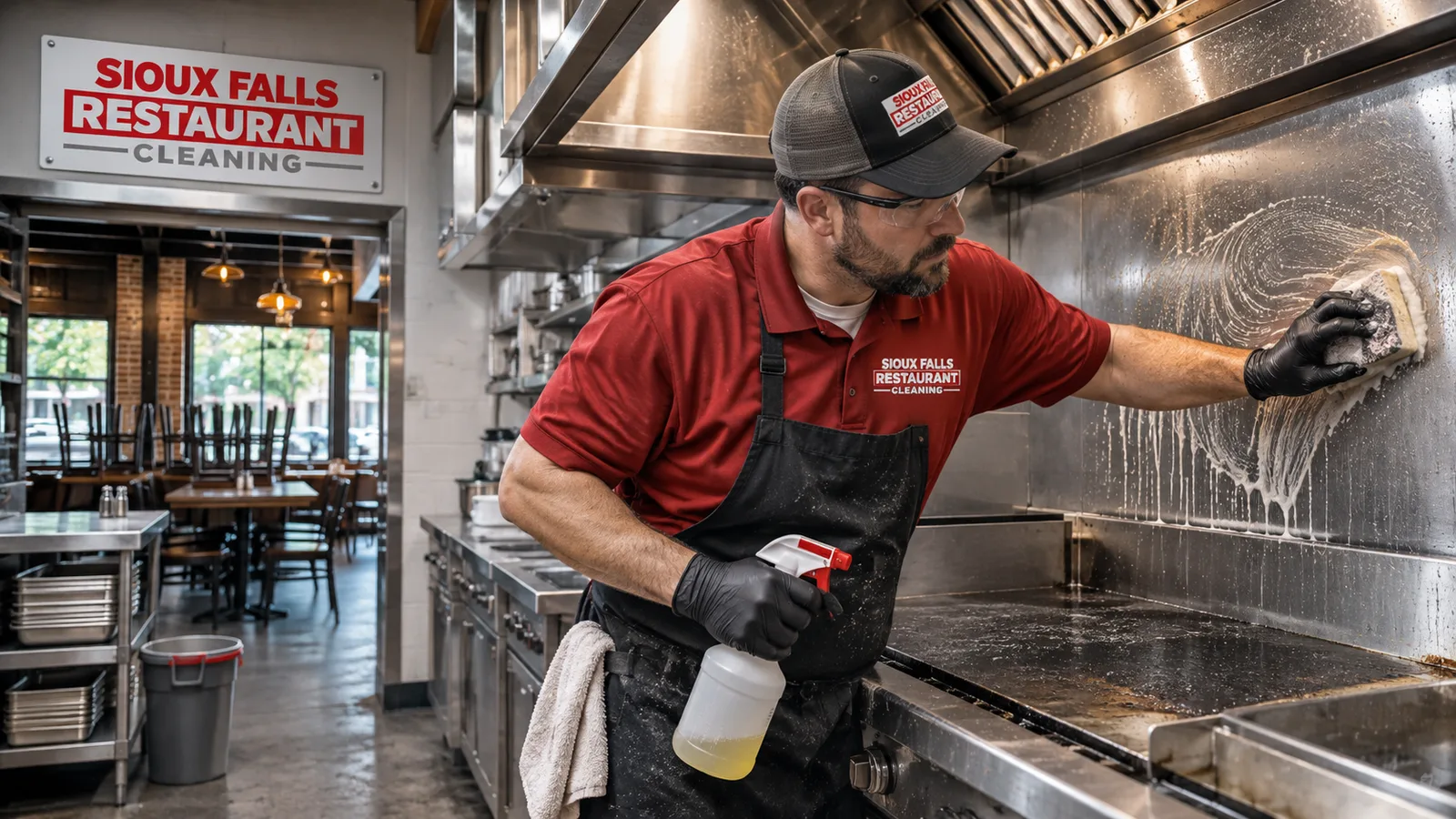
A professional cleaner degreasing stainless steel cooking equipment in an active Brandon restaurant kitchen after service

Cooking lines · Prep areas · Floors · Equipment exteriors

Detailed work planned around prep, service, and closing hours.

Operational Cleaning

Reliable Cleaning for Demanding Restaurant Kitchens

Commercial Kitchen Cleaning Brandon businesses can schedule around prep, service, and closing hours. Sioux Falls Restaurant Cleaning handles the detailed work that routine staff wipe-downs may not fully address, including grease film, food residue, soil around equipment, and buildup on hard-to-reach surfaces.

Our work is planned around the kitchen rather than forced into a generic checklist. We discuss the cooking line, prep areas, floors, equipment exteriors, access restrictions, and priority trouble spots before setting the scope. Drawing on our work as an experienced restaurant team in Sioux Falls, SD, we understand the pace of food-service operations in the Brandon and Sioux Falls area and organize the work to reduce disruption.

A professional deep clean supports the sanitation practices your employees perform every day. It also gives managers a clearer view of damaged seals, worn grout, loose floor transitions, and equipment issues that grime can hide. Cleaning does not replace pest control, equipment repair, fire-suppression service, or required hood and duct work, but it helps keep accessible kitchen surfaces in service-ready condition.

Detailed Scope

What Commercial Kitchen Cleaning in Brandon Can Cover

The right scope depends on the layout, menu, cooking volume, and time since the last detailed cleaning. Common work areas include cooking equipment exteriors, stainless steel tables, prep counters, shelving, backsplashes, wall surfaces, kick plates, sinks, floor edges, and accessible spaces beside or beneath movable equipment.

Degreasing is a major part of the work around fryers, ranges, grills, and other hot-line equipment. The cleaner and dwell time must match the soil and surface. Stainless steel needs a different approach than painted walls, quarry tile, vinyl composition tile, or sealed concrete. Careful rinsing and residue removal matter on food-contact and splash-zone surfaces.

Floors often require extra attention at grout lines, under mats, around drains, and where grease collects near the cooking line. We can also address front-of-house restaurant cleaning when it is included in the agreed scope, but kitchen work remains planned separately because grease, food soil, and equipment access demand different methods.

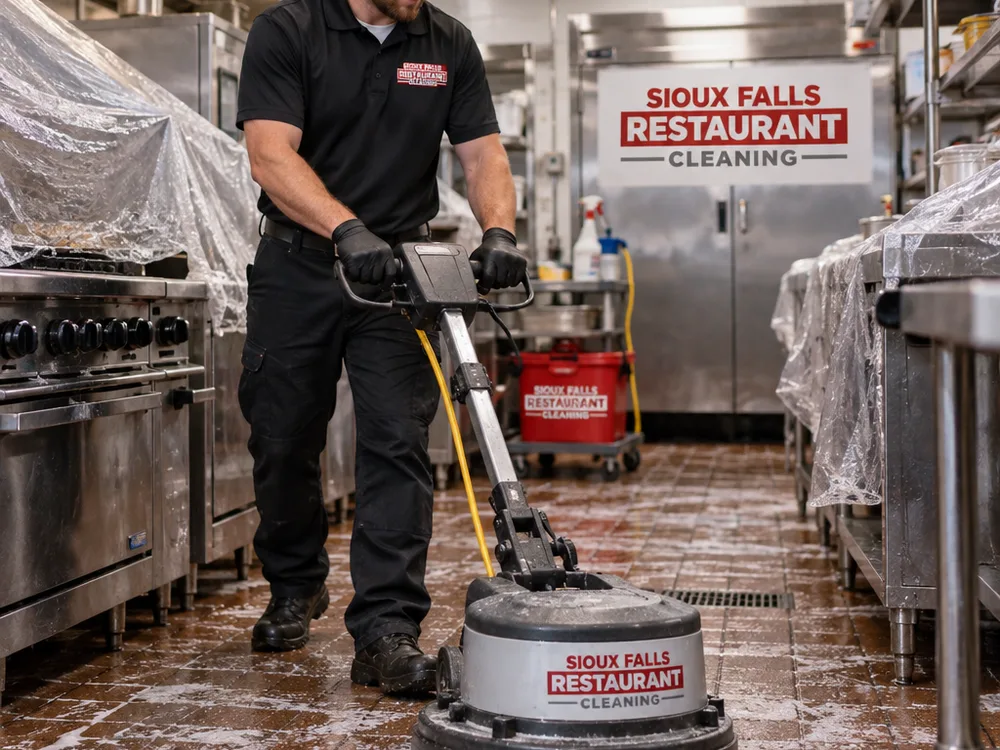
A technician using a low-profile floor machine on a grease-prone commercial kitchen floor while cooking equipment and prep surfaces remain protected
Equipment-safe methods and careful floor work help remove residue from high-use kitchen areas.
Cleaning Scope

A Practical Scope for Restaurant Cleaning in Brandon

Cooking-Line Degreasing

Accessible exteriors, control surrounds, splash areas, equipment sides, and nearby walls receive targeted treatment for grease and cooked-on residue. Equipment is handled according to access and manufacturer care requirements.

Prep and Warewashing Areas

Counters, sink surrounds, shelving, backsplashes, and exterior surfaces are cleaned with attention to food residue, mineral film, soap buildup, and frequently touched points.

Detailed Floor Care

Floor edges, corners, grout lines, mat areas, accessible spaces beneath equipment, and the perimeter around drains are treated according to the flooring material and soil level.

Vertical and Overhead Surfaces

Washable walls, doors, trim, ledges, and other reachable surfaces can be added when grease vapor or dust has left visible buildup. Overhead access is evaluated before work begins.

Scheduled Maintenance Cleaning

Recurring visits keep buildup from reaching the same level between deep cleans. Frequency is based on cooking volume, staffing routines, operating hours, and the condition found during the initial service.

Focused Corrective Cleaning

A defined area can receive concentrated attention after heavy use, a menu change, equipment movement, or a period when routine cleaning fell behind.

Planned Process

How the Cleaning Process Works

  1. Step 01

    Walk Through the Kitchen

    We identify priority areas, surface materials, movable equipment, fixed equipment, floor conditions, water access, and any operational restrictions. The walkthrough separates routine cleaning needs from specialty work that may require another qualified provider.

  2. Step 02

    Set the Scope and Schedule

    You receive a clear description of included areas and the conditions needed for access. Work can be planned around prep and service, with enough time for cleaning agents to dwell, surfaces to be rinsed, and floors to dry before employees return.

  3. Step 03

    Prepare and Protect the Work Area

    Food, utensils, small equipment, and exposed supplies must be removed or protected as appropriate. Equipment is cooled before degreasing, and electrical components or sensitive controls are not saturated.

  4. Step 04

    Clean in a Controlled Order

    Technicians generally work from higher surfaces toward lower ones and from cleaner areas toward heavier soil. Grease is loosened, soil is collected, and surfaces are rinsed or wiped according to the product and material.

  5. Step 05

    Review the Completed Scope

    The cleaned areas are checked against the agreed work list. Managers can note recurring problem spots and use that information to adjust employee routines or the frequency of professional cleaning.

Scheduling Fit

Why Brandon Kitchens Need a Site-Specific Plan

Brandon restaurants operate close to the larger Sioux Falls market, and many depend on tight staffing and closely timed prep windows. That makes access planning as important as the cleaning method. A crew arriving without a defined shutdown window can interfere with cooling equipment, opening duties, or deliveries.

South Dakota winters also bring snow, deicing residue, and tracked moisture through receiving and employee entrances. In a restaurant, that material can spread into corridors and kitchen floors, where it mixes with grease and increases the need for regular mat care and detailed floor cleaning. Entrances and transition areas should be included when they affect the kitchen work zone.

The cleaning plan should also distinguish accessible kitchen cleaning from commercial exhaust-system work. Grease filters may be cleaned when specifically included and suitable for the method, but hood plenums, ducts, and exhaust fans require specialized service and documentation. Likewise, cleaners should never alter fire-suppression components or disassemble gas and electrical equipment without proper authorization.

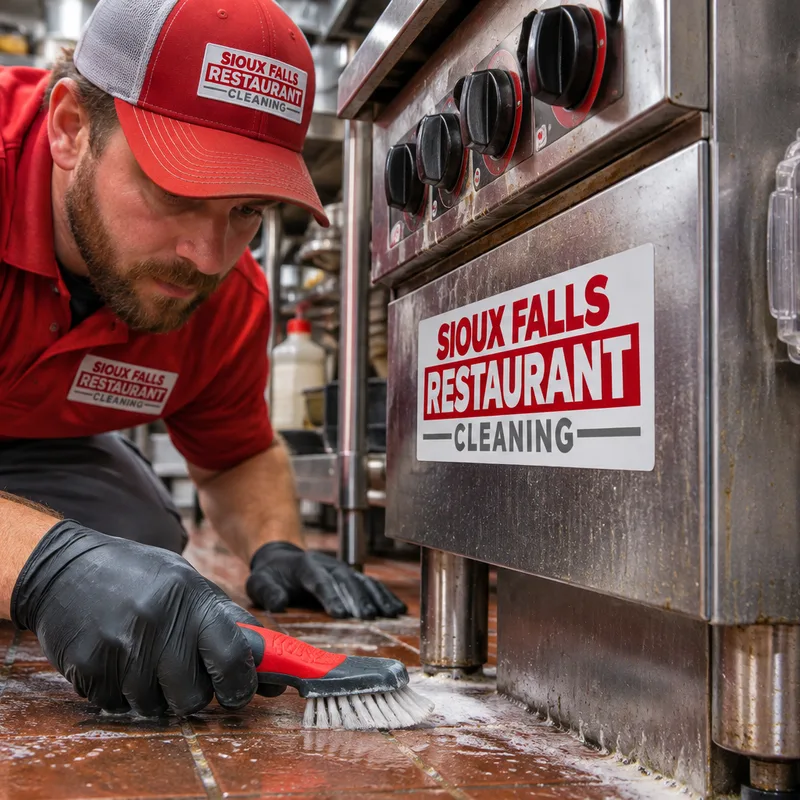
Close view of a technician cleaning grout lines and floor edges beside stainless steel commercial cooking equipment, with electrical controls kept dry
Detailed edge, grout, and equipment-perimeter cleaning addresses areas missed during fast nightly routines.
Maintenance Planning

Choosing the Right Cleaning Frequency

A kitchen with frequent frying, charbroiling, or high-volume cooking usually develops grease faster than a light-prep operation. Cleaning frequency should be based on visible buildup, slip risk, soil in grout and edges, operating hours, and what the in-house closing crew can reasonably complete.

A one-time deep clean is useful before reopening an area, after equipment has been moved, or when buildup has outpaced routine care. Recurring cleaning is better when managers want a stable standard across the cooking line, prep rooms, warewashing area, and floors. The initial condition provides the baseline. Later visits can focus on the surfaces that accumulate soil fastest rather than repeating unnecessary tasks.

Sanitizing is not the same as cleaning. Food soil and grease must be removed before a sanitizer can work as intended, and any food-contact process should follow the product label and the restaurant's sanitation procedures. Professional cleaning supports those procedures; it does not transfer the operator's food-safety responsibilities to the cleaning crew.

A walkthrough can turn a general request into a written scope built around your equipment, hours, and highest-priority cleaning needs.

Call for a Free Quote
Common Questions

Commercial Kitchen Cleaning Brandon FAQs

How much does commercial kitchen cleaning cost in Brandon?

Pricing depends on kitchen size, grease level, included surfaces, equipment access, and whether the work is one-time or recurring. A compact prep kitchen with accessible surfaces takes less labor than a high-volume cooking line with heavy buildup, detailed grout, and equipment that must be moved. After reviewing the Brandon location and requested scope, Sioux Falls Restaurant Cleaning can provide pricing based on the actual work rather than a generic square-foot figure.

Can restaurant cleaning be scheduled after closing?

Yes, cleaning can often be planned outside service hours when access, staffing, and drying time allow. The schedule should leave enough time to cool equipment, clear food and utensils, complete the work, and let floors dry before the next prep shift. For Brandon restaurants with early deliveries or breakfast service, the available overnight window needs to be confirmed in advance.

Do you clean behind and underneath kitchen equipment?

Accessible areas behind and beneath equipment can be included when the equipment can be moved safely and the scope identifies who will move it. Technicians should not disconnect gas, electrical, water, refrigeration, or fire-suppression connections unless properly qualified and authorized. Fixed equipment is cleaned around and beneath only to the extent that safe access permits.

Does commercial kitchen cleaning include the hood and exhaust ducts?

General kitchen cleaning does not automatically include internal hood, duct, or exhaust-fan cleaning. Those systems require specialized access, methods, and service records. Accessible hood exteriors and suitable filter cleaning can be discussed, but the written scope should clearly distinguish surface cleaning from full commercial kitchen exhaust service.

What should our staff do before the cleaning crew arrives?

Staff should remove or securely protect food, utensils, disposable goods, and small appliances from the work area. Cooking equipment should be shut down and cool, while aisles and floor areas should be clear enough for safe access. Any alarm, key, loading-door, or overnight access requirements at the Brandon property should be arranged before the scheduled start.

Can you clean while the restaurant is open?

Limited work may be possible in isolated areas, but deep kitchen cleaning is usually safer and more effective when cooking and active food preparation have stopped. Degreasers, wet floors, moved mats, hoses, and equipment access can conflict with normal operations. The walkthrough determines whether the work can be divided into closed zones or needs a full after-hours window.

How often should a Brandon restaurant schedule deep kitchen cleaning?

The right interval is set by cooking volume, grease production, floor condition, and the strength of the restaurant's daily cleaning routine. Frying and charbroiling can create faster buildup than cold preparation, while winter moisture and deicing residue can add floor-care demands near employee and receiving entrances. An initial cleaning provides a useful baseline for choosing a recurring schedule.

Plan a Cleaner, More Service-Ready Kitchen

Tell Sioux Falls Restaurant Cleaning about your Brandon kitchen, operating schedule, equipment layout, and problem areas. We will help define a practical scope and a workable time for the cleaning.