Cooking Line Equipment
Accessible surfaces on ranges, ovens, fryers, griddles, charbroilers, and hot-holding units can be degreased and detailed after shutdown and cooling.
Serving Sioux Falls, South Dakota & surrounding areas
Detailed cleaning for commercial cooking equipment, prep areas, and hard-to-reach surfaces, planned around your operating schedule.
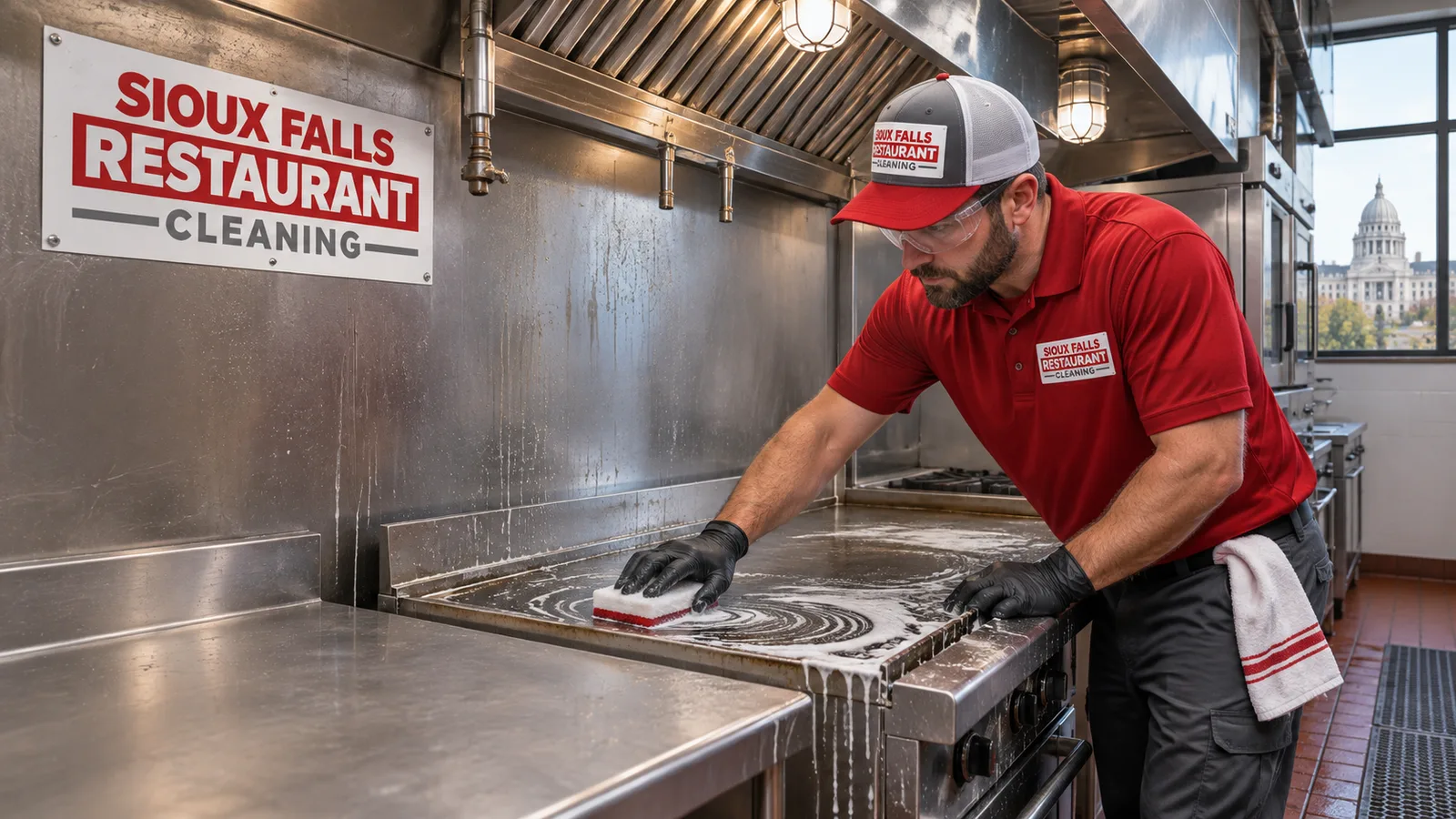
Cooking equipment · Removable parts · Detail points · Surrounding surfaces
Planned around cooling, access, and operating requirements.
Restaurant Equipment Cleaning Madison gives owners and kitchen managers a practical way to address baked-on grease, carbon deposits, food residue, and grime around commercial appliances. Sioux Falls Restaurant Cleaning handles the work with a defined scope based on your equipment, its condition, and the access available around each unit.
Our team cleans equipment exteriors, removable components, accessible interior surfaces, casters, legs, sides, and the floor and wall areas exposed when movable units are pulled out. We identify surfaces and soils before selecting degreasers, tools, and contact time. Working from our base at 114 S Reid St, Suite 5 in Sioux Falls, Sioux Falls' local restaurant service coordinates projects for Madison facilities and establishes timing, access, and shutdown needs before work begins.
A clear plan matters in a working kitchen. We discuss what can be cleaned in place, what must cool or be disconnected, and which areas should be left to a licensed equipment technician. That protects sensitive controls and helps your staff prepare the line before the crew arrives.
A service plan may include ranges, ovens, fryers, flat-top griddles, charbroilers, steam tables, prep tables, reach-in refrigeration exteriors, shelving, and other commercial kitchen equipment. The exact scope depends on manufacturer guidance, equipment condition, safe access, and whether components can be removed without technical disassembly.
Cleaning typically starts with dry removal of loose debris. Appropriate degreaser is then applied with controlled dwell time so bonded soil can soften before agitation and removal. Technicians use non-scratch pads, scrapers suited to the surface, detail brushes, microfiber cloths, and wet recovery methods where appropriate. Food-contact components receive a final treatment appropriate to their use before they return to service.
We do not treat every surface the same. Stainless steel, painted metal, cast iron, chrome, aluminum, glass, and control panels have different limits. Strong alkaline products can damage aluminum, while excess moisture near electrical controls creates avoidable risk. Product labels, safety data sheets, and equipment instructions guide the work.
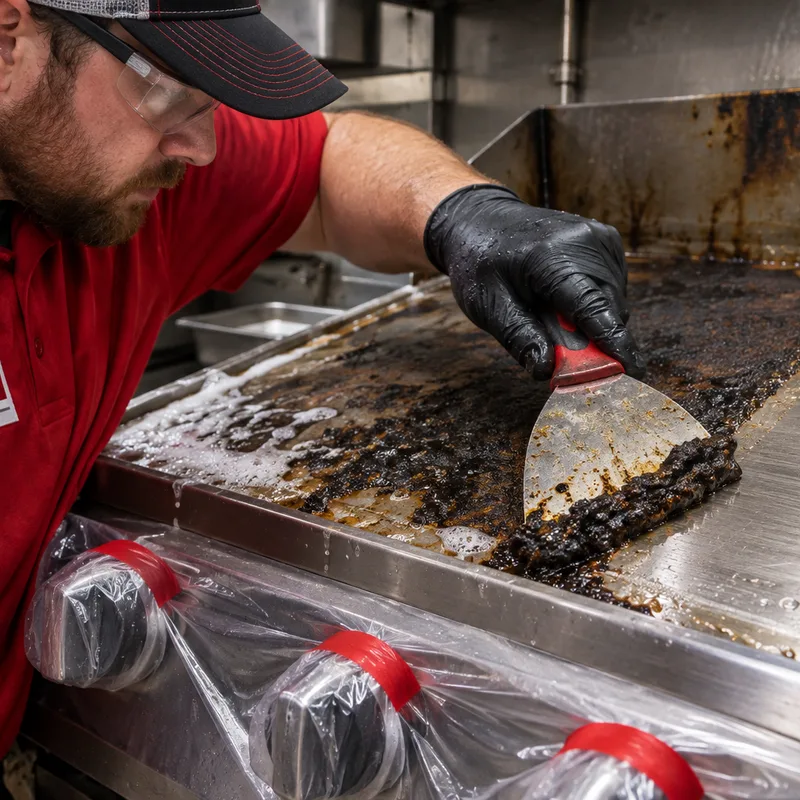
Accessible surfaces on ranges, ovens, fryers, griddles, charbroilers, and hot-holding units can be degreased and detailed after shutdown and cooling.
Where equipment can be moved safely, cleaning can address grease and debris along side panels, backsplashes, legs, casters, utility gaps, and floors beneath units.
Racks, trays, drip pans, grease cups, guards, and other approved removable parts can be cleaned separately, then dried and returned to their correct positions.
Stainless prep tables, shelving, carts, and accessible refrigeration exteriors can be added to create a consistent cleaning scope around the production area.
Handles, hinges, seams, edges, knobs, and caster assemblies collect residue that broad wipe-downs often leave behind.
Removed soil, used materials, and cleaning residue are cleared from the work zone so staff can complete their normal opening checks.
We identify equipment types, current soil levels, access limits, operating hours, and surfaces that need special handling. Photos or an on-location review can help define the scope.
The written scope states which units and accessible components are included. We also confirm arrival timing, expected downtime, cooling requirements, utility considerations, and the responsibilities of kitchen staff.
Food, utensils, smallwares, and loose supplies should be removed from the work zone. Nearby surfaces and sensitive controls are protected before cleaning products or wet methods are used.
Technicians remove loose debris, apply a surface-compatible product, allow suitable dwell time, agitate bonded residue, and recover the loosened soil. Heavy buildup may require repeated treatment.
Applicable surfaces are wiped or rinsed as required, then dried. Components are returned to position, and the completed work is checked against the agreed scope before the kitchen resumes its normal startup procedure.
Madison kitchens often need equipment work completed outside serving hours. Downtown restaurants may have tighter loading and service access, while facilities near Dakota State University may need scheduling that accounts for academic calendars, events, and changing meal demand. We confirm entry arrangements, parking or loading constraints, and who will provide access before dispatch.
South Dakota winters add another practical concern. Snow, ice, and tracked moisture can complicate loading access and floor protection, so crews and managers should agree on the safest entry route. Equipment must also have enough cooling time before degreasers or manual cleaning begin. Hot fryers, griddles, and oven components cannot be rushed safely.
The service is equipment cleaning, not repair. Gas connections, hard-wired electrical components, refrigeration systems, fire-suppression equipment, and internal mechanical assemblies require qualified trades when inspection, disconnection, or repair is needed. We clean only where access and equipment instructions allow.
Good commercial kitchen cleaning starts with boundaries. Accessible equipment surfaces can often be handled without technical disassembly, but fixed panels, electrical housings, gas components, refrigerant systems, and manufacturer-sealed areas should remain closed unless an authorized technician opens them. We point out access limitations before the job rather than treating inaccessible areas as included.
Buildup also changes the method and time required. A routine film on stainless steel is different from polymerized grease on a griddle surround or carbon deposits inside an approved cooking chamber. Heavy deposits may need more than one application, extended dwell time, or a separate return visit. Scraping and chemical strength must remain compatible with the underlying surface.
Managers can help by identifying equipment that is out of service, reporting damaged cords or controls, and sharing manufacturer cleaning instructions when available. The crew should also know whether units are mobile, restrained, hard-connected, or positioned under fire-suppression components. These details allow us to quote the actual work instead of relying on a generic kitchen estimate.
Share your equipment list, current buildup, preferred service window, and access conditions to receive a written scope tailored to your Madison kitchen.
Call for a Free QuotePricing is based on the number and type of units, soil level, accessible surface area, required labor, and scheduling conditions. A lightly soiled prep table takes less work than a cooking line with carbonized residue behind fixed equipment. Photos and an equipment list can support an initial scope, but an on-location review may be needed when access or buildup is unclear.
Equipment cleaning is usually safest and least disruptive when affected units are shut down, emptied, and cool. Some exterior detailing may be possible around operations, but degreasing a fryer, oven, griddle, or charbroiler near active food production is generally unsuitable. The service window should allow cleaning, drying, inspection, and your normal startup checks.
The duration depends on equipment count, buildup, access, and the amount of component removal permitted by the manufacturer. A limited group of maintained units may fit within one service window, while a heavily soiled cooking line can take longer or require phased work. We set timing after reviewing the actual scope.
Yes, staff should remove food, utensils, cookware, paper goods, and loose supplies from the agreed work zone. Equipment included in the scope should be shut down and given enough time to cool. The manager should also identify restricted controls, damaged components, alarm procedures, utility shutoffs, and the person authorized to approve completion.
Movable equipment may be repositioned when its weight, casters, restraints, utility connections, and surrounding space allow safe movement. Hard-connected or unusually heavy units are not moved without proper trade support. In compact Madison kitchens, clearance must be checked before the scope includes floors, walls, or side panels behind a unit.
Equipment cleaning and exhaust-system cleaning are separate scopes. This service addresses specified commercial appliances and accessible surrounding surfaces. Exhaust hoods, ducts, fans, fire-suppression components, and technical system work require their own review and may involve qualified specialists. We will identify the boundary in the written scope.
Sensitive areas receive limited-moisture methods and are cleaned only where the manufacturer permits access. Liquids should not enter switches, displays, wiring, motors, vents, or control housings. If safe cleaning requires panel removal, electrical disconnection, or internal technical access, the work should be handled with an authorized equipment technician.
The interval should reflect cooking volume, grease production, menu, manufacturer instructions, and the facility's own food-safety procedures. High-use fryers and griddles may need more frequent attention than storage carts or prep tables. Regular inspections are more useful than a single universal timetable because buildup rates differ across stations.
Tell Sioux Falls Restaurant Cleaning which units need attention, when the kitchen is available, and what access limits apply. We will help define a practical scope before work is scheduled.