Cooking Line
Degreasing for accessible appliance exteriors, flattops, range surfaces, fryer surrounds, backsplashes, ledges, and the floor around the line.
Serving Sioux Falls, South Dakota & surrounding areas
Detailed cleaning for cooking lines, food prep areas, floors, walls, and equipment, scheduled around your operating hours.
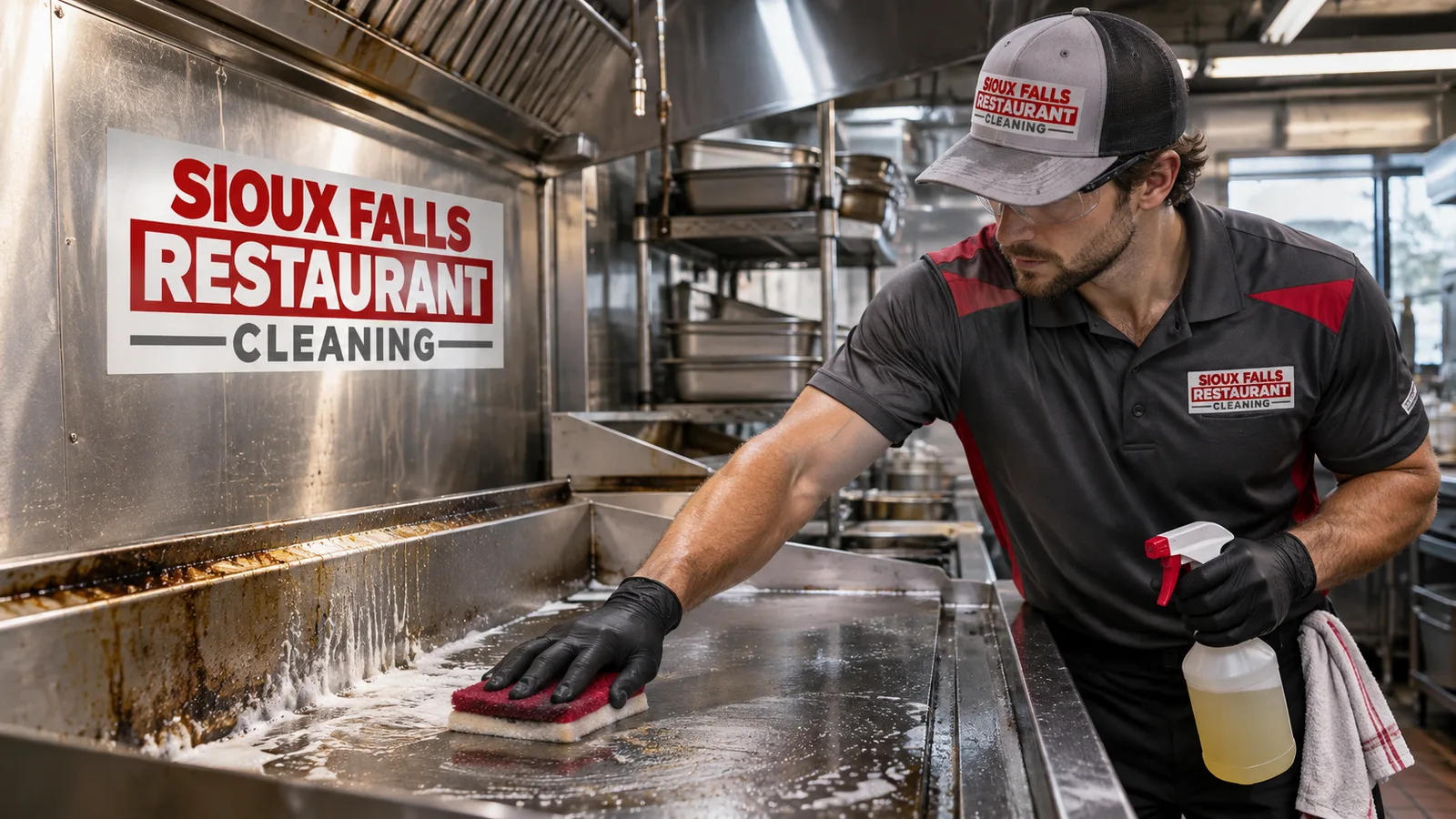
Cooking lines · Prep zones · Floors · Equipment
Planned around shutdown, access, and reopening requirements.
Commercial Kitchen Cleaning Services remove the grease, carbon buildup, food residue, and soil that routine closing duties may leave behind. Sioux Falls Restaurant Cleaning develops a written scope around your kitchen's equipment, layout, operating schedule, and highest-priority areas. The goal is a practical cleaning plan that supports daily sanitation work rather than getting in its way.
As Sioux Falls' restaurant specialists, we work in the spaces where restaurant crews cook, prep, wash, store, and move throughout a shift. That includes independent restaurants near Downtown Sioux Falls, high-traffic kitchens serving the Empire Mall area, and food operations along major commercial corridors such as Minnesota Avenue and East Tenth Street. Each setting has different access windows, equipment arrangements, and service demands, so the scope is built for the actual facility.
Professional kitchen cleaning is useful for recurring maintenance, scheduled deep cleans, seasonal resets, and preparation for a management walkthrough. Work can be arranged after closing or during another approved downtime. Before cleaning starts, the crew confirms access, shutdown requirements, sensitive equipment, and the surfaces included.
A commercial kitchen deep cleaning may include cookline exteriors, stainless steel worktables, backsplashes, shelving, sinks, washable walls, floor edges, mats, drains, and accessible surfaces behind or beneath movable equipment. Degreasers are selected for the soil and surface, allowed the proper dwell time, agitated where needed, and then removed according to product directions.
Kitchen equipment cleaning can address the accessible exterior and removable components of ranges, fryers, flattops, ovens, coolers, and other appliances included in the scope. Crews must distinguish between a surface that can be wet-cleaned and a control, electrical component, pilot assembly, or sealed area that requires protection. Equipment is shut down and cooled when the manufacturer or cleaning method requires it.
This work does not replace employee food-contact sanitation, licensed appliance repair, pest control, or exhaust-system service. Food-contact surfaces need an appropriate wash, rinse, and sanitize procedure before food preparation resumes. Exhaust hoods, ducts, and rooftop fans should be identified separately because those systems may require specialized access and documentation.
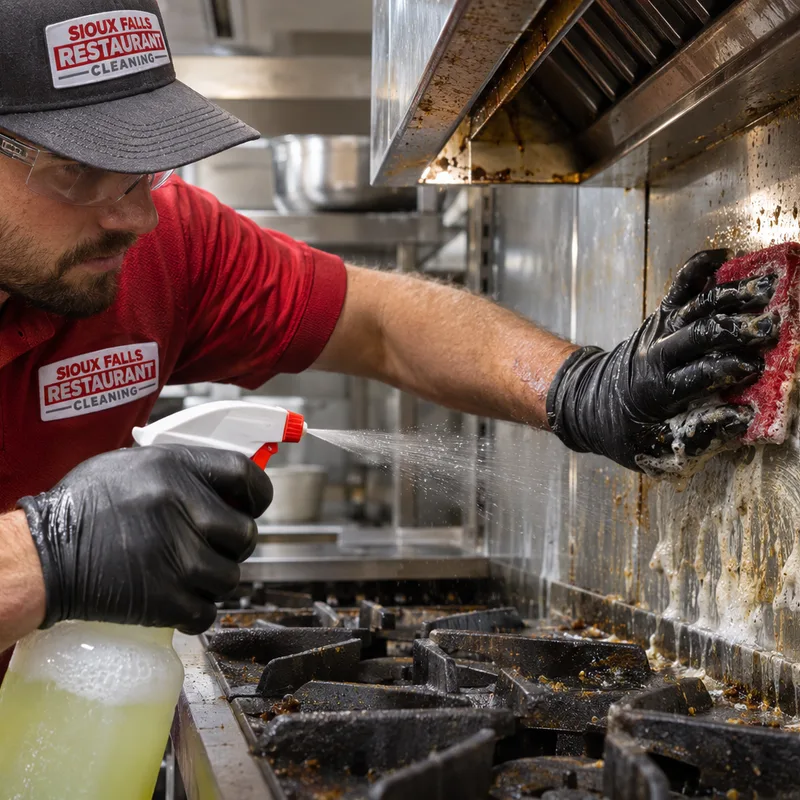
Degreasing for accessible appliance exteriors, flattops, range surfaces, fryer surrounds, backsplashes, ledges, and the floor around the line.
Cleaning for worktables, shelving, washable walls, sinks, and other approved surfaces where residue can collect during busy shifts.
Scrubbing focuses on traffic lanes, corners, floor-to-wall edges, beneath movable items, around legs, and accessible drain areas included in the scope.
Approved interior or exterior surfaces can be cleaned after food, containers, and loose stock are removed or secured by the operator.
Soil and scale are addressed on compatible sinks, walls, shelves, floor areas, and accessible equipment exteriors without interfering with chemical dispensing systems.
Rotating tasks can target overlooked ledges, casters, equipment sides, wall protection, door faces, and other areas that do not fit daily closing routines.
We review the cooking line, prep areas, floors, storage zones, equipment access, water availability, and the time available between shutdown and reopening.
The plan identifies included surfaces, excluded systems, equipment that may be moved, shutdown responsibilities, and any food or smallwares the operator must secure.
Food and loose items are removed or covered, equipment is cooled when required, sensitive controls are protected, and warning signs are placed around wet work areas.
The crew uses surface-compatible products and tools, working through the agreed areas while controlling overspray and wastewater.
A final walkthrough checks the listed areas, notes any condition that needs repair or a specialist, and confirms that the kitchen is ready for the operator's reopening procedures.
Kitchen cleaning services should fit the operating calendar. A late-night restaurant may need work after the final close, while a café or institutional kitchen may have a better afternoon or scheduled closure window. Winter weather in Sioux Falls also brings tracked-in moisture, sand, and deicing residue near receiving and service entrances. Those soils can spread into utility areas and increase the need for floor-edge and mat cleaning.
The time required depends on kitchen size, grease load, equipment density, access, and whether appliances can be moved safely. A focused cookline cleaning may fit into one shutdown period. A larger restaurant kitchen cleaning project may need phased work so the team can protect equipment and give each product sufficient dwell time.
Recurring service can divide detail work into manageable rotations. One visit may emphasize the line and surrounding floors; another can address storage shelving, wall surfaces, and accessible spaces behind movable equipment. The daily crew still handles its normal wash, rinse, sanitizing, and closing duties between professional visits.
Professional kitchen cleaning in Sioux Falls typically costs about $500 to $1,500 for a focused deep clean, while large, heavily soiled, or multi-zone kitchens may run $1,500 to $4,000 or more. Recurring maintenance is often priced per visit after a walkthrough.
Final pricing depends on square footage, grease buildup, equipment density, cleaning frequency, access behind appliances, overnight scheduling, and whether hood or exhaust work is separate. The exact cost is confirmed after an on-site assessment and written scope.
Ask what is included by surface and by equipment item. A quote that says “deep clean kitchen” can be interpreted several ways. A useful scope states whether appliance interiors, removable parts, walls, ceilings, shelving, floor drains, walk-ins, and equipment movement are included. It should also identify exclusions such as internal electrical components, gas connections, repairs, and exhaust ductwork.
Confirm who removes food, pans, utensils, countertop appliances, and storage containers before the crew arrives. Discuss which equipment can be shut down, how long it needs to cool, and whether only authorized personnel may move or disconnect it. Heavy appliances should not be shifted casually because utilities, casters, flooring, and nearby surfaces can be damaged.
Also ask how the crew prevents cross-contamination. Color-coded tools, clean-to-dirty workflow, controlled chemical use, and separation between restroom tools and kitchen tools are sensible practices. For food-contact surfaces, the operator should know whether final sanitizing is included or must be completed by restaurant staff before production begins.
Build a cleaning scope around your equipment, shutdown window, and highest-priority areas before the next deep-clean date arrives.
Call for a Free QuoteThe right frequency depends on cooking volume, menu, grease production, staffing, and how much detail work the closing crew can complete. Frying and high-heat cooking generally create heavier deposits than light preparation. Many operators use recurring cleaning for the busiest areas and schedule larger resets around maintenance periods, seasonal changes, or planned closures.
Yes, after-hours work can usually be planned when the available shutdown window is long enough for preparation, cleaning, drying, and reopening procedures. Access arrangements, alarms, equipment cooldown, water availability, and the next shift's start time should be confirmed during the walkthrough.
Accessible areas behind movable equipment can be included when the appliance can be shifted safely without disconnecting utilities or damaging the floor. Gas lines, hardwired connections, refrigeration lines, weight, and limited clearance may prevent movement. The written scope should name which items can be moved and who is responsible for doing so.
Hood canopy surfaces may be treated differently from the full exhaust system, so hood, duct, fan, and rooftop work should be confirmed as a separate scope. Commercial cooking exhaust systems can require specialized methods, access, and service records. A general kitchen cleaning quote should never be assumed to include the complete system.
Food and exposed ingredients should be removed from the work zone or securely protected before cleaning begins. Operators should also clear smallwares, disposable packaging, and loose containers as agreed. This gives the crew access and reduces the risk of chemical mist, moisture, or loosened soil reaching stored items.
A focused project may fit within one closure window, while a large or heavily soiled kitchen may require a longer visit or phased work. Equipment cooldown, buildup, access, square footage, and drying time affect the schedule. The estimated duration is set after the kitchen walkthrough.
An accurate quote needs the kitchen's approximate size, equipment list, current condition, requested areas, preferred schedule, access limits, and desired service frequency. Photos may help with initial planning, but an on-site review is the best way to identify dense cooklines, restricted clearances, and surfaces needing special treatment.
Tell Sioux Falls Restaurant Cleaning about your kitchen, operating schedule, and priority areas. We will help define a clear scope and a workable cleaning window.